
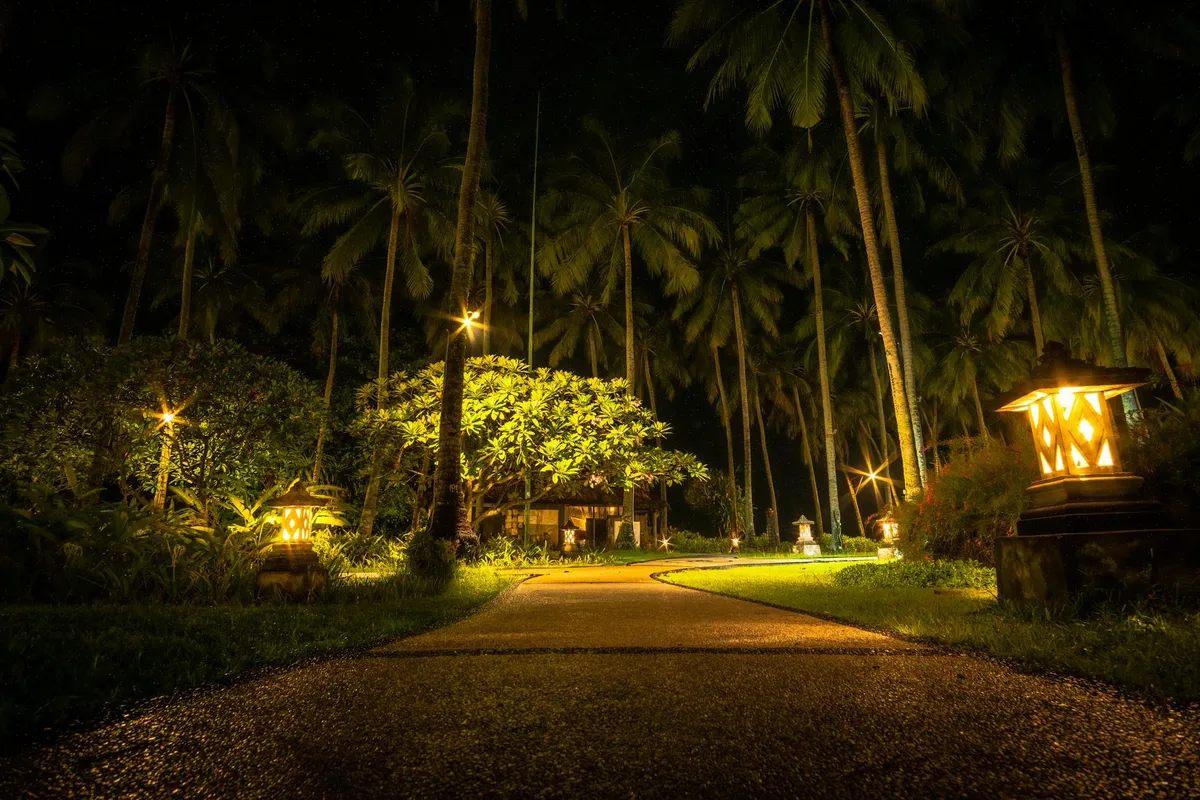
Smart outdoor lighting is one of those product categories where most reviews are written by people who haven't tried it through a real winter, and most marketing makes claims that fall apart after one rainstorm. Here's the version of this guide from someone who actually has the lights installed and has watched what happens.
What "smart outdoor lighting" actually means
Three different things, all marketed the same way:
- Smart bulbs in regular outdoor fixtures — you swap a bulb, control via app
- Smart fixtures — the whole light is smart (built-in Wi-Fi, schedules, app)
- Smart landscape systems — multiple connected lights along paths/yard, controlled centrally
Each is a different category with different trade-offs. Mixing them up is where most buying mistakes happen.
Smart bulbs in regular fixtures: the cheapest entry
If you already have outdoor fixtures (porch lights, garage lights), this is the cheapest path to smart. Buy outdoor-rated smart bulbs (most aren't — check the IP rating), screw them in, control via app. Done.
What works: schedules (sunset on, midnight off), occasional remote control, voice control if you're in that ecosystem. What doesn't: bulbs need to stay dry or they fail. "Outdoor rated" varies a lot by manufacturer. I've had cheap outdoor smart bulbs die in one winter and quality ones (Philips Hue, LIFX) last three years.
Bottom line: works for porch lights and any covered location. Skip for fully exposed outdoor fixtures.
Smart fixtures: the most reliable
Buying a whole fixture that's smart from the start is more expensive but more reliable. The whole thing is designed for outdoor use; the electronics are integrated, not bolted onto a regular bulb. Brands like Ring, Eve, and Philips Hue have full outdoor lines.
What works: this is the path of least frustration. Set it once, it works for years. Schedules, motion triggers, dimming all work as advertised. What doesn't: cost. A smart porch fixture is $80-200 vs $25-50 for a non-smart one.
Worth it if: you care about reliability and want to stop thinking about your outdoor lights. Worth skipping if: you're looking for cheap experimentation.
Smart landscape systems: the most ambitious
These are the multi-light kits — pathway lights, spotlights, well lights — all controlled together via an app. Brands like Ring Smart Lighting, Philips Hue Outdoor, and the higher-end stuff like Hunza and FX Luminaire.
What works: when set up right, these are spectacular. The whole yard lit on a schedule, dimmed for evening dinners, brightened when motion is detected. The "wow" factor is real.
What doesn't: setup is a project, not an install. You're running low-voltage cable. You're placing transformers. You're troubleshooting connectivity. Plan for a weekend, minimum, and have a Plan B for when one light won't join the network.
Worth it if: you're landscaping anyway, or you have a yard that genuinely benefits from lighting design. Worth skipping if: you just want a porch light that turns on at sunset.
The plain-English buying guide
Pick based on what you actually want to do:
- Porch on at sunset, off at bedtime: smart bulb, $25, done
- Garage flood that turns on with motion: smart fixture, $90-150
- Path lit when you walk it: smart fixture or landscape system, $200+
- Whole-yard mood lighting: landscape system, $500+ and a real install weekend
Three things you can stop worrying about
- Voice control. It works fine on all major systems now. Not a differentiator.
- App quality. All major apps are good enough. Don't pick brands based on app reviews.
- Colour-changing. Sounds fun. After the first two weeks, you'll set it to warm white and never change it. Don't pay extra for it on outdoor lights specifically.
One thing you should worry about
The hub. Some smart lighting systems require a hub (a small box that connects your lights to your network). Some don't. The trade-off: hub-based systems are more reliable but locked to that ecosystem; Wi-Fi systems are simpler but die when your Wi-Fi has a hiccup.
If you're building an outdoor lighting system you want to last 10 years, lean toward hub-based. If you want to try smart lighting cheaply and might switch later, lean toward Wi-Fi.
The thing nobody mentions
Outdoor lighting always looks better dimmer than you think. Most installations are too bright. Buy fixtures that dim, and use the dimmer. The single biggest difference between "okay outdoor lighting" and "this looks like a hotel" is restraint on brightness.