

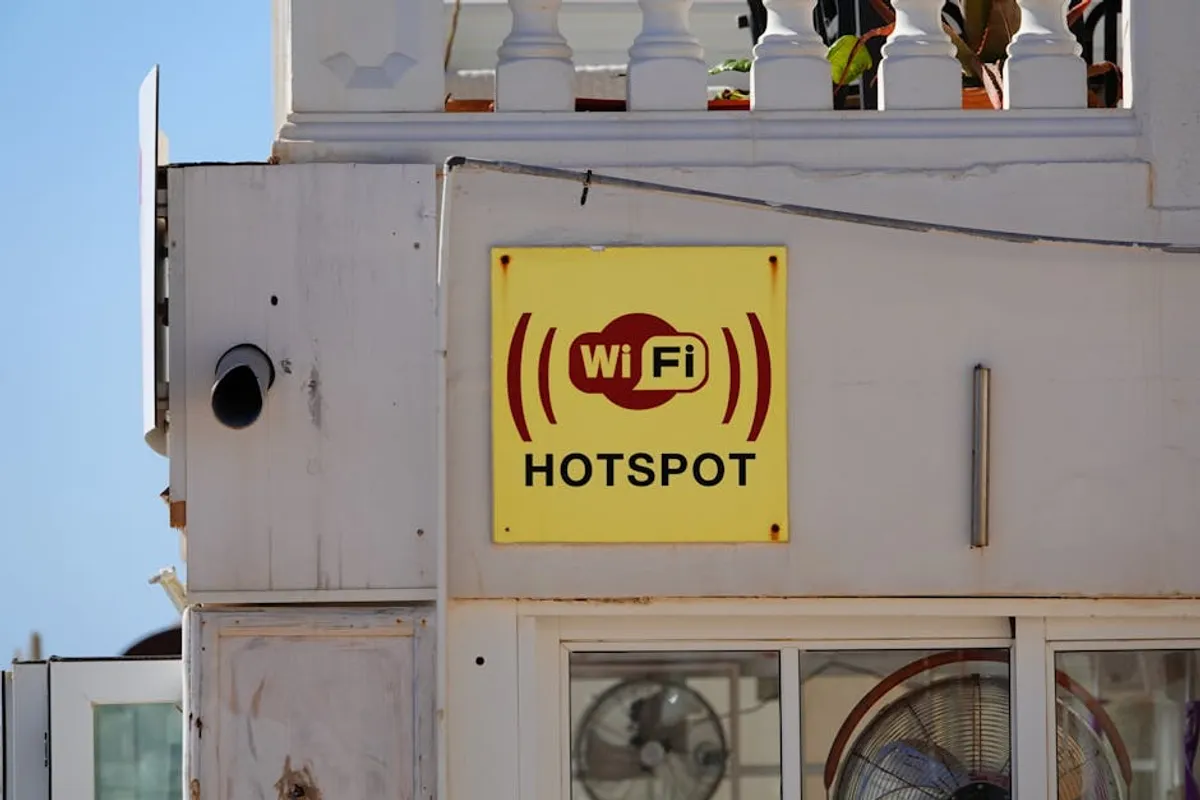
Extending a reliable WiFi signal beyond indoor walls presents specific challenges. Outdoor environments introduce variables like weather exposure, signal obstructions from foliage or structures, and larger coverage areas. Unlike indoor range extenders, outdoor WiFi extenders are engineered with robust housings, higher-gain antennas, and often Power over Ethernet (PoE) capabilities to withstand elements and broadcast signals over greater distances. Selecting the right unit requires evaluating its weather resistance, signal strength, operating modes, and integration with existing network infrastructure to ensure consistent connectivity for smart outdoor devices, security cameras, or recreational use.
Key Considerations for Outdoor WiFi Extenders
Before committing to an outdoor WiFi extender, evaluate several critical factors to ensure the device meets your specific needs and environmental conditions:
- Weather Resistance (IP Rating): Look for an IP (Ingress Protection) rating, typically IP55 or higher, indicating protection against dust, rain, and extreme temperatures. This is non-negotiable for longevity.
- Antenna Type and Gain: Directional antennas focus the signal in a specific direction, ideal for point-to-point connections or covering a long, narrow area. Omnidirectional antennas broadcast in all directions, suitable for broader area coverage. Higher dBi (decibels isotropic) gain indicates stronger signal transmission.
- Wireless Standard and Speed: Wi-Fi 5 (802.11ac) is common, offering good speeds, while Wi-Fi 6 (802.11ax) provides improved efficiency and throughput, especially in congested environments. Match the extender's standard to your primary router for optimal performance.
- Operating Modes: Most outdoor units can function as an access point (creating a new WiFi network), a range extender (repeating an existing signal), or a client bridge (connecting wired devices to WiFi). Some offer point-to-point or point-to-multipoint bridging.
- Power over Ethernet (PoE): PoE simplifies installation by delivering both power and data over a single Ethernet cable. This is highly beneficial for outdoor setups where power outlets may be scarce or inconvenient.
- Management and Setup: Consider the ease of installation and configuration. Many modern units offer app-based setup, while others rely on web interfaces. Look for features like guest networks, QoS (Quality of Service), and robust security protocols (WPA3).
- Coverage Area: Assess the physical area you need to cover. A large backyard, a pool area, or an entire outdoor facility will require different levels of power and antenna configuration.
1. Ubiquiti UniFi AC Mesh (UAP-AC-M)
The Ubiquiti UniFi AC Mesh is a versatile outdoor access point designed for expansive outdoor WiFi coverage. It integrates seamlessly into the UniFi ecosystem, allowing centralized management of multiple devices through the UniFi Network Controller software. Its dual-band 802.11ac performance and compact, weather-resistant design make it suitable for various outdoor deployments, from residential backyards to large public spaces. The device supports mesh networking, enabling multiple units to create a unified, robust outdoor WiFi blanket without extensive cabling.
Best for: Users already invested in the Ubiquiti UniFi ecosystem, or those requiring scalable, centrally managed outdoor WiFi across large properties, parks, or event venues.
Pros:
- Excellent scalability and centralized management via UniFi Controller.
- Robust, weather-resistant (IPX5) housing suitable for harsh outdoor conditions.
- Dual-band 802.11ac (Wi-Fi 5) delivers reliable speeds up to 1167 Mbps.
- Supports mesh networking for flexible deployment and extended coverage.
- Passive PoE compatibility simplifies installation with a single cable for power and data.
Cons:
- Requires some networking knowledge for optimal configuration, especially for advanced features.
- No built-in web interface; relies entirely on the UniFi Controller for setup and management.
- Initial cost may be higher than basic consumer extenders.
Verdict: A professional-grade solution for those prioritizing robust, scalable, and centrally managed outdoor WiFi. Its mesh capabilities and weatherproofing make it a strong performer for challenging outdoor environments, provided you are comfortable with the UniFi management paradigm.
2. TP-Link Omada EAP225-Outdoor
The TP-Link Omada EAP225-Outdoor offers a cost-effective solution for extending WiFi coverage to outdoor areas. As part of TP-Link's Omada SDN (Software Defined Networking) platform, it provides centralized cloud management for multiple EAPs, similar to Ubiquiti's UniFi. This dual-band 802.11ac access point features two detachable omnidirectional antennas, allowing for potential upgrades or directional antenna attachment. Its IP65-rated enclosure ensures protection against dust and water jets, making it a durable choice for various outdoor settings.
Best for: Small to medium businesses, educational campuses, or homeowners seeking a reliable, centrally manageable outdoor WiFi solution with good performance at a competitive price point.
Pros:
- IP65 weather-resistant enclosure protects against harsh outdoor elements.
- Dual-band 802.11ac (Wi-Fi 5) provides speeds up to 1200 Mbps.
- Supports Omada SDN for centralized cloud management, simplifying multi-device deployment.
- Flexible deployment with passive PoE and 802.3af/at PoE support.
- Detachable antennas allow for customization or upgrades.
Cons:
- Requires an Omada controller (hardware or software) for centralized management; can operate standalone but loses many benefits.
- Antenna gain might be insufficient for very large, complex outdoor areas without additional units.
- Setup can be more involved than consumer-grade plug-and-play extenders.
Verdict: A strong contender for those needing a durable and manageable outdoor access point without the premium price of some enterprise solutions. Its Omada integration offers significant advantages for multi-device setups, making it a scalable choice for many outdoor scenarios.
3. EnGenius EnStationAC
The EnGenius EnStationAC is a long-range, outdoor 802.11ac wireless bridge and access point designed for point-to-point (PtP) or point-to-multipoint (PtMP) applications. It features high-gain directional antennas (19 dBi for 5 GHz, 13 dBi for 2.4 GHz), making it ideal for extending networks over significant distances, such as between buildings or across large outdoor spaces. Its robust IP55-rated enclosure ensures reliable operation in challenging weather. While primarily a bridge, it can function as an access point to broadcast a local WiFi signal at the remote end.
Best for: Extending network connectivity between distant buildings, providing WiFi to remote outdoor areas from a central source, or creating robust wireless backhaul links.
Pros:
- Exceptional long-range capabilities due to high-gain directional antennas.
- Dual-band 802.11ac (Wi-Fi 5) supports high throughput for demanding applications.
- IP55-rated enclosure provides strong weather resistance.
- Supports multiple operating modes, including Access Point, Client Bridge, and WDS.
- 802.3at PoE+ support simplifies installation over long cable runs.
Cons:
- Primarily designed for directional links; less suitable for broad omnidirectional coverage from a single unit.
- Requires precise aiming for optimal performance in point-to-point setups.
- More complex to set up compared to simple range extenders.
Verdict: When long-distance wireless bridging or highly directional outdoor WiFi is the primary goal, the EnGenius EnStationAC excels. Its robust build and powerful antennas make it a reliable choice for extending networks where traditional extenders fall short, though it requires more technical setup.
4. Netgear Orbi Outdoor Satellite (RBS50Y)
The Netgear Orbi Outdoor Satellite (RBS50Y) is an extension specifically designed to integrate with an existing Netgear Orbi mesh WiFi system. It provides a seamless, high-performance WiFi signal to outdoor areas by wirelessly connecting to the Orbi router or another Orbi satellite. Its weather-resistant, IP66-rated design ensures durability in various outdoor conditions. The RBS50Y extends the Orbi's dedicated backhaul, maintaining strong speeds even at a distance, and offers a single SSID for effortless roaming between indoor and outdoor zones.
Best for: Existing Netgear Orbi users who want to extend their mesh WiFi network seamlessly to outdoor spaces like patios, pools, or gardens without creating separate networks.
Pros:
- Seamless integration with existing Netgear Orbi mesh systems, providing a single SSID.
- Robust IP66 weather-resistant rating for extreme outdoor durability.
- Dedicated wireless backhaul ensures high performance and speed outdoors.
- Easy setup via the Orbi app, mirroring the main system's configuration.
- Offers two Gigabit Ethernet ports for wired outdoor devices.
Cons:
- Only works with Netgear Orbi systems; not a standalone extender.
- Higher price point compared to many standalone outdoor access points.
- Requires proximity to an existing Orbi signal for optimal backhaul performance.
Verdict: For Orbi system owners, the RBS50Y is the most straightforward and effective way to extend high-speed, seamless WiFi outdoors. Its robust build and mesh integration make it a premium, hassle-free solution, though its utility is limited to the Orbi ecosystem.
5. Linksys Velop Outdoor (WHW0303-AC)
The Linksys Velop Outdoor is a weather-resistant mesh WiFi node designed to expand a Linksys Velop whole-home mesh system into outdoor areas. It offers dual-band 802.11ac WiFi and features an IP66 rating for protection against dust and powerful water jets. Like the Orbi satellite, it aims to provide seamless roaming and a single WiFi network experience across both indoor and outdoor environments. Its compact, discreet design allows it to blend into various outdoor aesthetics while delivering reliable connectivity.
Best for: Users with an existing Linksys Velop mesh system looking to expand their unified WiFi network outdoors with minimal configuration effort and a focus on aesthetics.
Pros:
- Seamlessly integrates with Linksys Velop mesh systems for unified SSID and roaming.
- IP66 weather-resistant design ensures durability in outdoor conditions.
- Dual-band AC1300 WiFi provides good speed and coverage for typical outdoor use.
- Compact and discreet design, easy to mount.
- Simple setup via the Linksys Velop app.
Cons:
- Exclusively compatible with Linksys Velop mesh systems; not a standalone extender.
- Performance depends on the strength of the wireless backhaul to the nearest Velop node.
- May not offer the same long-range capability as dedicated directional access points.
Verdict: If you are already using a Linksys Velop system, this outdoor node is an intuitive and effective way to extend your mesh network. It prioritizes ease of use and seamless integration over raw long-range power, making it ideal for residential outdoor spaces.
6. MikroTik SXTsq Lite5
The MikroTik SXTsq Lite5 is a compact, lightweight outdoor wireless device primarily functioning as a 5 GHz CPE (Customer Premises Equipment) for point-to-point links or as a client for point-to-multipoint networks. It features an integrated 16 dBi directional antenna, making it highly effective for establishing stable, long-distance wireless connections. While not an omnidirectional "extender" in the traditional sense, it can serve as the receiving end of a long-range link, providing a network connection to a remote outdoor area where a local access point can then be deployed. Its RouterOS operating system offers extensive configuration options.
Best for: Highly technical users, IT professionals, or WISP operators needing to establish long-distance, stable 5 GHz point-to-point links for network extension to remote outdoor locations.
Pros:
- Excellent long-range 5 GHz performance with integrated 16 dBi directional antenna.
- Extremely compact and lightweight design for easy mounting.
- Powered by RouterOS, offering unparalleled configuration depth and flexibility.
- Cost-effective solution for establishing wireless bridges.
- PoE support simplifies outdoor installation.
Cons:
- Steep learning curve due to the complexity of RouterOS; not for novice users.
- Strictly directional; requires precise aiming for optimal links.
- Does not broadcast an omnidirectional WiFi signal itself; requires an additional AP for local WiFi.
Verdict: For users who understand networking and require a robust, long-distance wireless bridge, the MikroTik SXTsq Lite5 offers powerful capabilities at an accessible price. Its strength lies in creating stable backhaul connections, rather than providing broad local WiFi coverage.
7. TP-Link CPE210 (2.4 GHz) / CPE510 (5 GHz)
The TP-Link CPE series, including the CPE210 (2.4 GHz) and CPE510 (5 GHz), are outdoor CPE devices designed for long-range wireless data transmission, similar to the EnGenius EnStationAC but often at a more budget-friendly price point. They feature integrated directional antennas (9 dBi for CPE210, 13 dBi for CPE510) and are housed in IPX5 weather-resistant enclosures. These units are primarily used for point-to-point, point-to-multipoint, or outdoor WiFi coverage in specific directions, utilizing TP-Link's Pharos Control centralized management application.
Best for: Budget-conscious users needing to establish directional long-range WiFi links or provide focused outdoor coverage for areas like parking lots, farms, or remote buildings.
Pros:
- Cost-effective solution for long-range directional outdoor WiFi.
- IPX5 weather-resistant enclosure ensures durability.
- Integrated directional antennas provide focused signal strength.
- Supports multiple operating modes (AP, Client, Repeater, Bridge, AP Router).
- Pharos Control software allows centralized management of multiple CPE devices.
Cons:
- Directional antennas mean limited omnidirectional coverage from a single unit.
- Requires careful aiming for optimal point-to-point performance.
- Setup might be more involved than consumer-grade plug-and-play extenders.
Verdict: The TP-Link CPE series offers a strong balance of performance and value for directional outdoor WiFi needs. They are reliable workhorses for extending networks over distances, making them suitable for specific outdoor applications where broad, omnidirectional coverage isn't the primary requirement.
8. D-Link DAP-3310
The D-Link DAP-3310 is an outdoor 2.4 GHz Wireless N PoE Access Point designed for extending WiFi coverage in outdoor environments. It features a high-gain 5 dBi directional antenna and a robust IPX5-rated housing, making it resistant to harsh weather conditions. While it operates only on the 2.4 GHz band, this can be advantageous for penetrating obstacles and covering longer distances, though at potentially lower speeds than 5 GHz. It supports various operating modes, including Access Point, Wireless Client, WDS (Wireless Distribution System), and Repeater.
Best for: Extending 2.4 GHz WiFi to outdoor areas where long range and obstacle penetration are more critical than raw speed, such as large backyards, small farms, or outdoor storage facilities.
Pros:
- IPX5 weather-resistant casing ensures durability in outdoor settings.
- High-gain directional antenna provides extended 2.4 GHz range and penetration.
- PoE support simplifies installation by combining power and data.
- Supports multiple operating modes for versatile deployment.
- Good for penetrating foliage and some building materials.
Cons:
- Single-band 2.4 GHz operation means lower maximum speeds and more susceptibility to interference.
- Directional antenna limits broad omnidirectional coverage.
- Setup may require more technical understanding than consumer devices.
Verdict: For specific outdoor scenarios where 2.4 GHz's longer reach and better obstacle penetration are prioritized over 5 GHz speeds, the D-Link DAP-3310 is a solid, budget-friendly option. It's a reliable choice for extending basic internet access to remote outdoor spots.
9. TRENDnet TEW-737APO
The TRENDnet TEW-737APO is an outdoor 2.4 GHz Wireless N Access Point featuring an IP67-rated enclosure, offering superior protection against dust and water immersion. It includes a 10 dBi directional antenna, making it suitable for focused outdoor WiFi coverage or point-to-point applications over moderate distances. Its support for various operating modes (AP, WDS, Repeater, Client) provides flexibility in deployment. The robust build quality is a key differentiator, ensuring reliability even in very challenging environmental conditions.
Best for: Users needing an exceptionally durable, weather-resistant outdoor access point for 2.4 GHz WiFi in harsh environments, such as marine applications, industrial outdoor sites, or areas with heavy rainfall.
Pros:
- IP67-rated enclosure provides excellent protection against dust and water immersion.
- High-gain 10 dBi directional antenna for focused 2.4 GHz range.
- PoE injector included, simplifying power and data delivery.
- Supports multiple operating modes for versatile network extension.
- Robust build quality for extreme outdoor conditions.
Cons:
- Limited to 2.4 GHz band, impacting maximum speed and capacity.
- Directional antenna requires careful positioning for optimal coverage.
- Not as feature-rich or scalable as some business-grade alternatives.
Verdict: The TRENDnet TEW-737APO stands out primarily for its extreme durability and high IP rating. If your outdoor environment is particularly demanding and you need a steadfast 2.4 GHz connection, this unit offers robust physical protection and reliable focused coverage.
10. Engenius ENS620EXT
The EnGenius ENS620EXT is an outdoor dual-band 802.11ac (Wi-Fi 5) access point designed for broad outdoor WiFi coverage. It features two detachable 5 dBi omnidirectional antennas, allowing for 360-degree signal propagation. Its IP55-rated enclosure provides protection against dust and water splashes. The ENS620EXT supports various operating modes, including Access Point, Client Bridge, and Repeater, making it adaptable to different outdoor network expansion needs. It also supports 802.3af PoE for simplified installation.
Best for: Providing widespread, omnidirectional dual-band WiFi coverage for medium-sized outdoor areas like patios, pool decks, or small outdoor gathering spaces where a single unit needs to serve multiple directions.
Pros:
- Dual-band 802.11ac (Wi-Fi 5) delivers good speeds and capacity.
- Omnidirectional antennas provide 360-degree coverage from a single point.
- IP55-rated enclosure offers good weather resistance.
- Detachable antennas allow for potential upgrades or directional antenna attachment.
- 802.3af PoE support for flexible power options.
Cons:
- Omnidirectional antennas may not offer the same long-range as directional units.
- Maximum range might be limited in very large or obstructed outdoor environments.
- Management interface is web-based, lacking advanced app integration of some competitors.
Verdict: The EnGenius ENS620EXT is a solid choice for those needing an omnidirectional, dual-band outdoor access point. Its balanced performance, weather resistance, and flexible operating modes make it a versatile option for general outdoor WiFi extension without the complexity of highly directional setups.
Optimizing Your Outdoor WiFi Coverage
Once an outdoor WiFi extender is installed, effective placement and configuration are crucial for maximizing its performance. Begin by selecting a mounting location that offers a clear line of sight to the areas you intend to cover, minimizing obstructions like dense foliage, large structures, or metal objects. Position the extender high enough to broadcast over common obstacles but still accessible for maintenance. Ensure the chosen location is within adequate range of your primary router or network source for a strong backhaul connection.
For directional antennas, precise aiming is critical. Use the manufacturer's provided tools or a WiFi analyzer app to fine-tune the angle for optimal signal strength and throughput to your target area. For omnidirectional antennas, consider a central placement within the desired coverage zone. Utilize the extender's management interface to monitor signal strength, connected clients, and throughput. Adjust channel settings if you detect interference from neighboring networks. Regularly update firmware to ensure security and performance enhancements.
Consider the power source. If using Power over Ethernet (PoE), ensure the cable run is within specified limits for voltage drop. Protect all cable connections from moisture using weather-sealed enclosures or dielectric grease. Periodically inspect the unit and cabling for signs of wear or weather damage, especially after severe weather events, to maintain consistent outdoor connectivity.
Frequently Asked Questions
What is the difference between an outdoor WiFi extender and an outdoor access point?
An outdoor WiFi extender typically repeats an existing WiFi signal to extend its range. An outdoor access point creates a new WiFi network from a wired Ethernet connection. Many modern outdoor units can operate in multiple modes, including both extender and access point, offering flexibility.
Do I need a line of sight for an outdoor WiFi extender to work?
While not always strictly required, a clear line of sight significantly improves performance and range, especially for 5 GHz bands and directional antennas. Obstacles like thick walls, dense trees, or metal structures can severely degrade signal quality and speed.
Can I use a regular indoor WiFi extender outdoors?
No. Indoor WiFi extenders are not designed to withstand outdoor conditions. They lack the necessary weatherproofing (IP rating) and are susceptible to damage from rain, snow, dust, UV radiation, and extreme temperatures, leading to premature failure.
What is an IP rating, and why is it important for outdoor extenders?
An IP (Ingress Protection) rating indicates a device's resistance to solids (dust) and liquids (water). For outdoor extenders, an IP rating like IP55, IP65, or IP67 is crucial. The first digit refers to dust protection (6 is dust-tight), and the second digit refers to water protection (5 is water jets, 7 is temporary immersion). A higher rating means better protection against the elements.
How do I power



